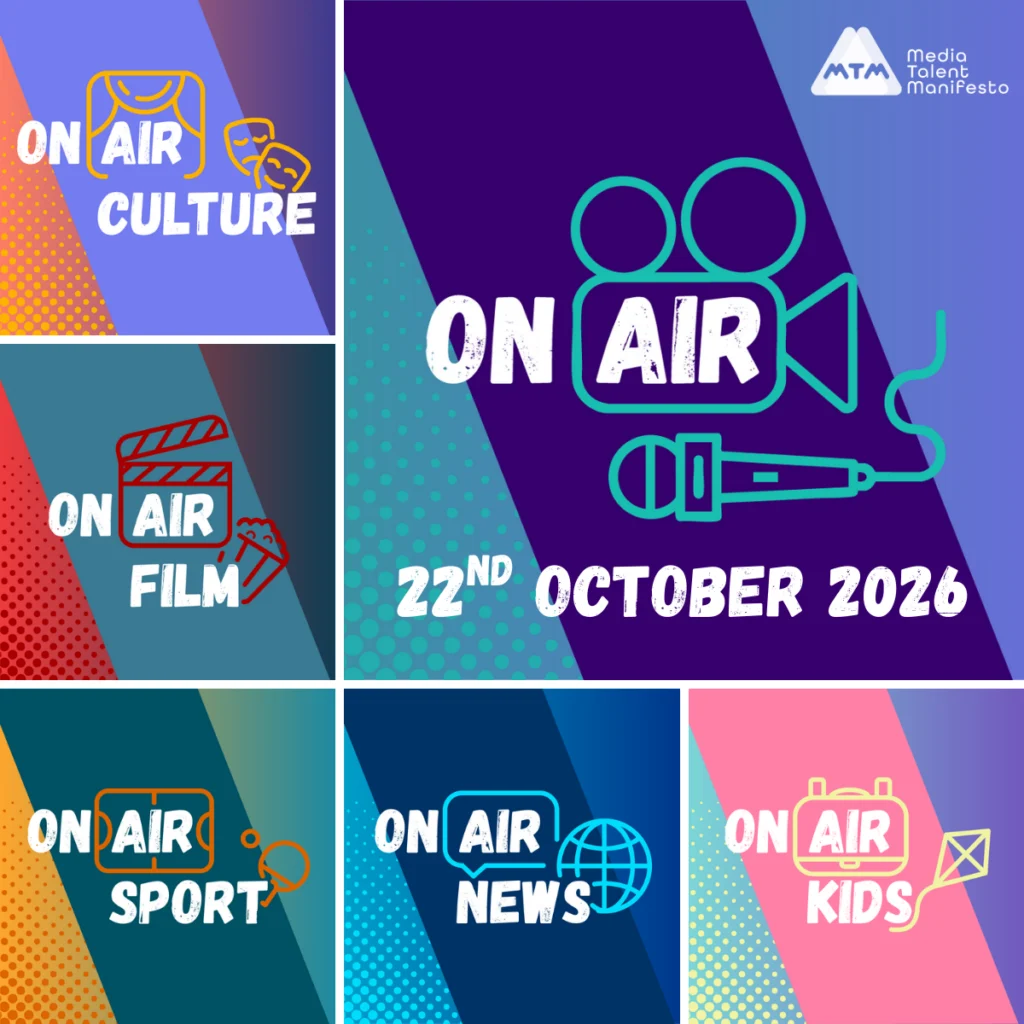
On 22 October, students from universities around the world will put five live television channels on air simultaneously for a full 24 hours. The event is On Air 2026, run by the Media Talent Manifesto and led by Carrie Wootten. Billed as the world’s largest student broadcast, it brings together students and broadcast professionals to create and deliver a real 24-hour live broadcast.
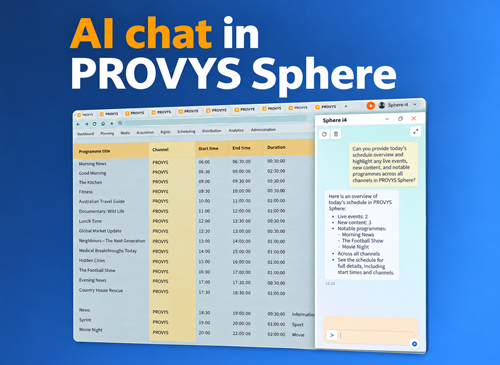
For the second year, PROVYS is a technology partner, providing PROVYS Sphere to support the scheduling team as they coordinate content from participating universities and prepare five simultaneous broadcast schedules for transmission.
The scheduling team is led by Laurissa Yeung Shea, Application Manager at Warner Bros. Discovery, and broadcast consultant Sarah Chase. They recently wrote about their experience for PRODUCTION360° in an article titled The Art of Timing, describing the work behind the schedules and the challenges involved in preparing a broadcast of this scale.
Coordinating five channels across time zones
Coordinating one live channel is demanding enough. On Air 2026 has five, carrying student-produced content from universities around the world, with contributions coming from 17 different time zones. To bring everything together into a coherent broadcast, all contributions need to be aligned to a single reference time – British Summer Time (BST).
As Yeung Shea and Chase describe it, scheduling combines several levels of planning. The team needs to coordinate contributions from different time zones, define the precise timing of live programmes and transitions, and schedule presentation elements such as idents and bumpers. At the same time, every scheduled item needs the correct metadata and links to the corresponding content so that the resulting playlists can be processed by the playout system.
As Yeung Shea and Chase put it, “the schedule can look splendid, but if it’s not compatible with playout or linked to the content, nothing will go to air.”
How PROVYS Sphere supports the scheduling team
Working closely with Renata Chytková and the PROVYS team, the On Air scheduling group configured PROVYS Sphere around the specific requirements of the project. One of the challenges identified during preparations was the complexity of coordinating programme contributions across multiple time zones.
Together, the teams developed what they nicknamed the “timezone translator”. Within PROVYS Sphere, the scheduling team can see the relevant timezone, its abbreviation and the corresponding local time alongside the common broadcast time. This allows them to work with one central schedule while immediately seeing what a particular broadcast slot means for each participating university.
The collaboration also resulted in a bespoke playlist export, providing the playout team with the schedule information and metadata required for transmission.
For On Air 2026, the scale of the operation has grown considerably: from one channel to five, with live sport adding another scheduling challenge. PROVYS Sphere gives the team a central place to build and adjust schedules, manage the associated metadata and prepare the playlists needed downstream. When live events move or plans change, the scheduling team can update the schedule while keeping the information required for transmission together.
As Yeung Shea puts it, the system means the team no longer has “to use our fingers and toes to calculate timezones”.
Supporting the next generation of broadcast professionals
The technology is only one part of the project. On Air is designed to give students practical experience of how a real broadcast operation comes together – not only on screen, but also behind it.
Students gain hands-on exposure to programme scheduling, media planning, continuity, compliance and presentation scheduling. They take part in project meetings, problem-solving sessions and test days, working alongside experienced broadcast professionals and seeing how decisions made during planning ultimately affect what goes to air.
PROVYS supports the project by providing both the software and the expertise needed to adapt the scheduling workflow to On Air’s specific requirements. This gives students an opportunity to experience the types of tools, processes and challenges they may later encounter in professional broadcasting, while giving the On Air team a structured way to manage the complexity of five simultaneous live channels.
For PROVYS, this is what makes the partnership particularly valuable: applying professional broadcast technology to a real production while helping the next generation of broadcast professionals understand not only how a schedule is created, but how it becomes television.
On Air 2026 broadcasts live for 24 hours from 22 October. You can follow the channels via the Media Talent Manifesto’s YouTube channel and find out more at mediatalentmanifesto.com/on-air.